Benefits of Magnetic Flooring vs. Traditional Installation Methods
For decades, floor installation has been associated with disruption and limitations. Traditional methods often involve messy adhesives, noisy nail guns, or fragile click-lock systems prone to cracking. These approaches can lead to significant business downtime, exposure to toxic fumes, and the commitment of glued-down flooring.
Magnetic flooring systems are revolutionizing floor installation projects. A magnetic underlayment works with specially designed floor planks to create a secure bond without adhesives, nails, or other complications, so you can update your floors with ease.
Magnetic Flooring vs. Traditional Flooring Installation
There are two main types of magnetic flooring systems. The first kind features flooring with a magnetized backing layer designed to work with a receptive underlayment — Magnus® falls into this category. Other systems use flooring with a receptive backing layer paired with a magnetic underlayment. Both approaches create a magnetic bond without adhesives or chemicals.
The installation process is more straightforward and involves rolling out the magnetic underlayment across your subfloor and placing the receptive plank on top. With no curing time required, you can use the space immediately. This premium underlayment is magnetically receptive and provides smooth surfaces, acoustical benefits, and moisture protection.
Traditional methods create challenges that magnetic systems avoid, such as:
- Installation speed: Magnetic flooring takes hours, whereas traditional methods require days. A business might complete a magnetic installation in less than a day, while a glue-down installation could keep its space unusable for one to two days during adhesive curing.
- Skill set required: DIYers can complete a magnetic installation without specialized tools, making it easier to install. Traditional installations often need professional contractors who understand adhesive and proper flash time monitoring.
- Adhesive complications: Glue-down installation requires watching for a narrow window when the adhesive reaches optimal tackiness. If it’s missed, you’ll have to scrape up the failed adhesive and start over.
- Click-lock frustrations: Angling planks to precise angles runs the risk of breaking the locking mechanisms, and a broken clip means replacing the entire plank.
- Cleanup differences: Dry installation means no adhesive spills or sticky residue, while traditional glue-down can create a messy work environment that requires more cleanup.
Magnetic systems work faster and eliminate the complications that come with adhesives and mechanical locking systems. Businesses and homes can avoid the downtime associated with glue-down installations with magnetic flooring options.
Replace Planks Easily with Magnetic Flooring
In addition to an easy installation, repairing magnetic flooring is also straightforward. Flooring damage can occur regardless of the installation method, but magnetic systems make repairs easy.
Here’s how magnetic flooring simplifies repairs:
- Magnetic removal and replacement: When a plank gets damaged, use a flooring suction cup tool to lift it straight up. The magnetic bond releases cleanly, allowing you to drop in a replacement within seconds. If you want to swap sections for updated colors or patterns, you can lift old planks and install new ones just as easily.
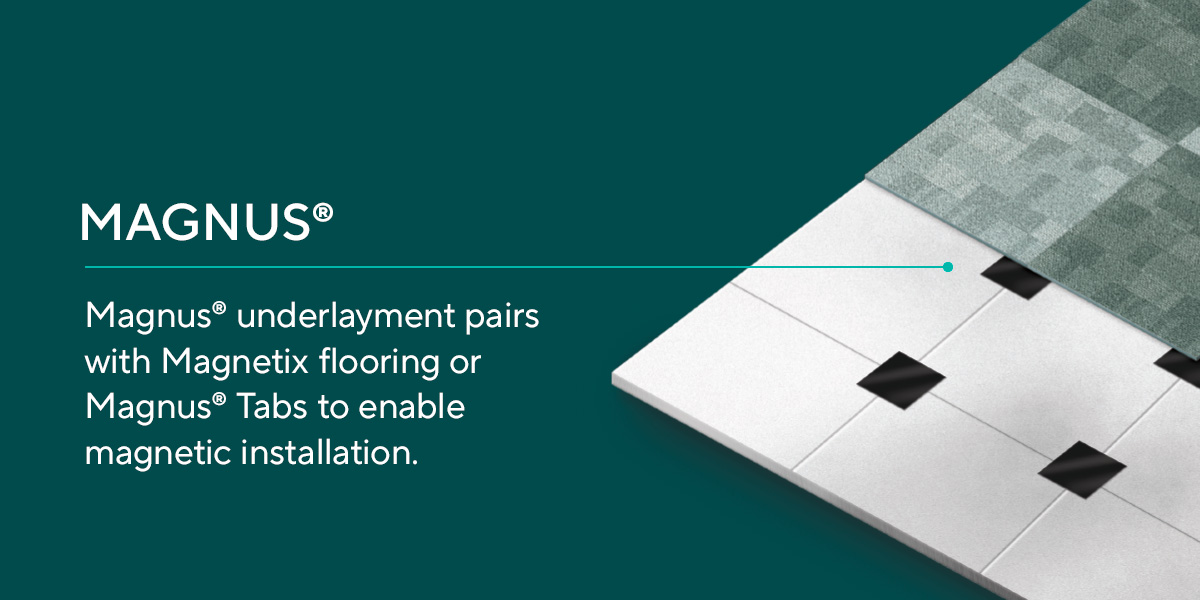
- Subfloor preservation: Magnetic systems use no adhesive, so subfloors stay clean without glue residue, chemical damage, or scraping. Magnus® underlayment can be installed directly with the Magnetix line of luxury vinyl flooring, which features a magnetic backing, or with Magnus® Tabs, which convert non-locking traditional flooring into a magnetic-compatible solution.
- Glue-down destruction: In traditional installations, damaged planks must be carefully chipped out with scrapers and heat guns. These loud, dusty operations often damage subfloors and require fresh adhesive, more curing time, and careful blending to make repairs invisible.
- Click-lock complications: Reaching a damaged wooden plank requires disconnecting the entire floor from the nearest wall to the damage point. You may end up lifting and repositioning dozens of planks just to swap one piece.
- Flexibility: This reusable flooring solution means you can easily adapt to your changing needs over time. You can replace individual planks, allowing for quick aesthetic updates or functional changes to your space. This adaptability makes refreshing and reconfiguring your layout simple, without the need for extensive renovations or professional installation.
Magnetic repairs can take just minutes with basic tools. Traditional repairs typically need contractor rates and specialized equipment, plus the downtime while you wait for work to be completed.
Reusability and Environmental Advantages
Environmental impact matters for your air quality and long-term sustainability. Magnetic systems avoid the environmental challenges that traditional adhesive methods create through the following:
- Avoiding volatile organic compound (VOC) emissions: Removing adhesives eliminates a primary source of indoor air pollution, as VOCs from traditional flooring glues can off-gas for months. Magnetic systems produce no chemical emissions, which allows spaces to be used immediately without health concerns.
- Utilizing sustainable materials: Magnus® products use a VOC-free composition. The magnetic component consists of flexible strontium ferrite without plasticizers, making it phthalate-free.
- Contributing to waste reduction: Magnetic flooring planks lift cleanly, leaving no adhesive residue, so they can be recycled or reused elsewhere. Additionally, when it’s time for a full flooring update, the underlayment can remain in place while new flooring is installed on top. This extends the overall system’s lifespan, reduces material waste, and minimizes landfill contributions.
- Recycling ability: Adhesive-covered flooring from traditional installations rarely qualifies for recycling programs due to the chemical bonding, which creates mixed-material waste that most facilities cannot process.
Magnetic approaches can reduce waste and improve recyclability. Traditional methods create single-use flooring bound for landfills, while magnetic systems enable reuse, extending the material’s life cycle.
Magnetic Flooring Cost Considerations
Although magnetic flooring sometimes has a higher up-front cost, the total investment span looks different when you factor in labor, downtime, and maintenance. The cost breakdown includes several elements, with key considerations such as:
- Material costs: Magnetic flooring systems may cost more than typical glue-down vinyl due to the magnetic underlayment and compatible planks, but installation labor savings typically help offset these higher material costs.
- Labor savings: Magnetic systems allow you to handle installation yourself, eliminating labor costs. Even if you choose to hire professionals, magnetic installation is faster and cheaper than traditional methods.
- Eliminated supplies: Adhesive materials add expense beyond basic plank costs, including trowels, rollers, taping systems, and the adhesive itself. Magnetic systems require none of these supplies.
- Revenue protection: Magnetic systems allow overnight or weekend installations that preserve normal operating hours. The revenue and operation maintained during installation often exceed what you pay for magnetic materials.
- Maintenance savings: Repairs that may require contractors for traditional installations can be simple with magnetic systems. This can eliminate service fees while extending its life cycle through sectional updates rather than a full flooring replacement.
- Future Flexibility: When it’s time for a new look, magnetic systems allow you to lift and replace the flooring while keeping the underlayment in place. This reduces future renovation costs by eliminating tear-out and minimizing new material and labor expenses.
Installation labor savings and lessened downtime can help offset the higher initial investment you may make. A traditional floor that costs less initially may become more expensive over its lifespan when considering its maintenance, repairs, and eventual disposal costs.
Experience the Benefits of floorMuffler® Magnetic Flooring
Magnetic flooring installation can provide many advantages compared to traditional methods, including faster return to service, a more environmentally friendly installation with low emissions, and the flexibility to repair or replace planks whenever.
Whether you oversee a commercial space that can’t afford downtime or tackle a DIY flooring project at home, magnetic flooring can eliminate many of the barriers posed by traditional materials. Learn more about our Magnus® product or browse all our underlayment options for different installation needs.
Contact us today for any additional support for all your flooring project specifications.
 floorMuffler Pink UltraSeal is at Home Depot ® – Purchases support the