Cold Floors in Winter? The R-Value Guide
During winter mornings, you might get a shiver when your feet hit the cold, uninsulated floor. This may prompt you to crank up the heat, but doing so barely helps. The problem likely isn’t your furnace, but what’s underneath your floors. In winter, cold floors can act like a thermal bridge, drawing warmth away from your living space and into the concrete or crawl space below.
So, heated airflow likely won’t fix the chill in your home, as you need a barrier that stops lower temperatures at their source. Understanding R-values can help you choose an underlayment that makes your cold floors more comfortable.
Understanding Thermal Properties
Before you choose underlayment, it’s essential to understand the science and components behind thermal insulation. The R-value is the key measurement that determines how well a material keeps your floors warm.
What is an R-Value of Insulation?
The R-value quantifies a material’s resistance to heat flow, also known as thermal resistance. A higher R-value indicates superior insulation performance.
Think of R-value like a winter coat. A well-insulated parka keeps you warmer than a basic windbreaker, and the same principle applies to your floors. Standard plastic sheets won’t protect against a cold basement subfloor any more than a windbreaker would in a blizzard.
Like a well-designed winter coat, premium underlayments achieve high R-values through engineered density and cellular structure—not thickness alone. This design protects your floor’s locking system, maintains warranty compliance, and delivers superior thermal performance.
What is the R-Rating on Insulation?
R-rating and R-value mean the same thing. People often look for the “rating,” but the standard term used is “value.” Both refer to the thermal resistance measured under specific conditions, and R-values add up by combining your subfloor, underlayment, and floor covering. Every layer works to keep your space warm.
Other Thermal Properties
Thermal conductivity and thermal mass can also affect how warm or cold your floors feel. Closed-cell materials retain heat better, which is why premium underlayments could outperform open-cell foam, value alternatives. Products designed with closed-cell foam create effective thermal breaks, preventing cold air from reaching your floor covering.
Comparing Underlayment Types and Their R-Values
An underlayment is a protective layer installed between your subfloor and floor covering that can provide moisture protection, sound dampening, and thermal insulation. Not all underlayments deliver the same thermal performance, as material composition, density, and construction methods all impact how effectively each type can insulate your floors. Here’s how common materials compare:
- Cork: Natural cork underlayment typically provides a low value R-value of approximately 0.75 per inch, offering some insulation, though it can be more costly and less flexible.
- Rubber: Recycled rubber underlayment generally has a low R-value of around 1.0 per inch, and offers limited thermal benefits, despite being an eco-friendly option.
- Standard foam: Budget-friendly polyethylene foam offers a moderate R-value of around 2.5 per inch, providing adequate thermal protection, but the potential for quick compression.
- Felt and fiber: Dense felt underlayments can achieve R-values around 3.0 per inch, but fiber-based materials may be prone to moisture absorption in humid conditions.
- Premium foam: Advanced closed-cell polypropylene foams can provide significantly higher R-values, such as 4.3 per inch, creating an effective thermal break and often including moisture barrier protection, which helps prevent cold drafts and dampness.
Understanding these differences helps you select an underlayment that matches both your budget and thermal performance needs. When evaluating the best underlayment for winter comfort, consider both the R-value and additional features such as moisture protection.
Regional Recommendations
Your location determines the thermal protection considerations you need to make. Climate zones experience different temperature extremes and humidity levels, which directly affect underlayment requirements.
Climate Zones and R-Value Requirements
The U.S. Department of Energy divides the country into climate zones, each with different insulation needs. Cold and very cold climates in Zones 5-7 require the highest floor insulation R-values, so more northern and midwestern states should prioritize the highest possible R-value combined with moisture protection.
Warm and hot southern climates in Zones 1-2 face different challenges, where humidity control often matters more than R-value. While thermal insulation still provides comfort and energy efficiency, a quality moisture barrier becomes essential to prevent mildew and mold growth.
Mixed climate zones in Zones 3-4 benefit from balanced solutions and should choose an underlayment that provides both thermal insulation and moisture protection to handle seasonal temperature swings. Especially in colder zones, every layer of your flooring system counts toward comfort. Even a slight increase in an underlayment R-value can provide warmer floors and lower heating costs. The thermal properties of underlayment aim to work alongside your HVAC system to maintain consistent indoor temperatures.
Product Recommendations With High R-Values
floorMuffler® offers underlayment solutions made for optimal thermal performance. These products combine high R-values with moisture barriers and acoustic properties:
- floorMuffler® ultraSeal: Works well for laminate and engineered wood, with cross-linked, closed-cell polypropylene foam that creates an effective thermal break, separating cold concrete from your floor covering. The integrated moisture barrier helps protect floors from cold dampness rising through the subfloor, while the ultraSeal lip and tape system seals seams between rolls to prevent drafts.
- floorMuffler® Encore: Addresses the naturally cold feel of luxury vinyl and rigid core flooring by creating warmth underfoot for LVT and vinyl that naturally feel cold due to their plastic composite construction. The closed-cell foam provides compression resistance to protect your floor’s locking system while maintaining thermal performance.
Both products feature sealed-seam technology, making complete floor coverage just as important as the R-value itself. These specifically made solutions deliver thermal protection that standard underlayments can’t match.
Installation Tips for Maximum Thermal Performance
Proper installation techniques ensure you get the full thermal benefit from your underlayment, and even premium products lose effectiveness when installed incorrectly. It’s key to follow the manufacturer guidelines, installation best practices, and these steps before starting your next flooring project:
- Prepare the subfloor: Clean and level your subfloor before laying underlayment. Address cracks and significant imperfections to create a smooth, stable surface.
- Join underlayment seams: Use the ultraSeal lip and tape system to connect underlayment rolls without gaps.
- Run perpendicular to your flooring: Unroll and install the underlayment in the opposite direction that your flooring planks will run. This prevents the seams of the underlayment from lining up directly beneath the seams of your floor, ensuring maximum stability and insulation.
- Protect the perimeter: Run the underlayment completely flush to the edges of the walls to ensure no weak points exist in your thermal barrier. Cold air often sneaks in at the edges of a room, so edge-to-edge coverage is vital for maximum warmth.
The floorMuffler® ultraSeal system securely connects each roll to prevent gaps and shifting beneath your flooring. Maintaining this seamless, continuous foam layer ensures the underlayment’s R-value remains perfectly consistent across the entire room.
Choose the Best Insulation for Cold Floor Solutions
Cold floors don’t have to be part of your winter routine. Choosing the right underlayment can create a thermal break between your living space and the cold subfloor, keeping your feet comfortable and your energy bills in check. With options made for different flooring types and climate zones, floorMuffler® delivers the R-value performance you need.
Whether you want to DIY your flooring by shopping at your local hardware store or are a contractor looking for premium underlayment solutions, floorMuffler® has you covered. Browse our underlayment options, contact us to find your local distributor, or find our products at Home Depot to find the perfect solution for your home today.

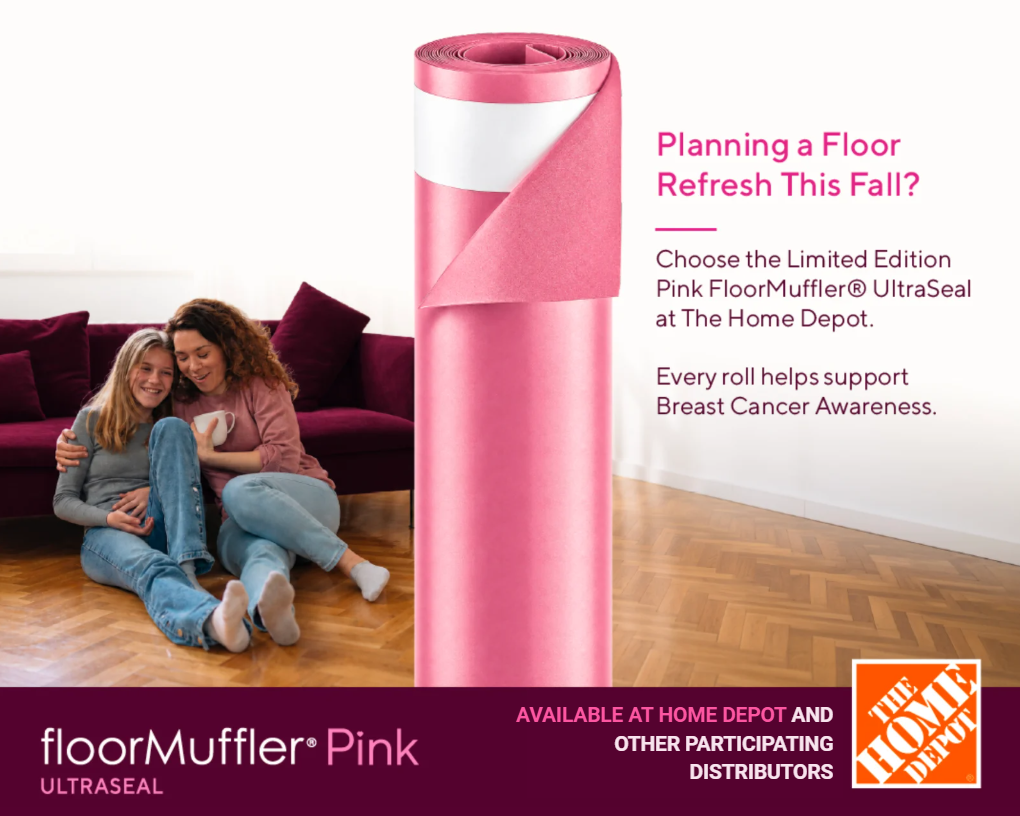
 floorMuffler Pink UltraSeal is at Home Depot ® – Purchases support the