Thick vs. Thin Underlayment: Which Should You Choose?
Many assume that thicker underlayment is the superior option for flooring projects—that more thickness automatically means better moisture protection, sound control, and thermal performance. In reality, this isn’t always the case. Although certain installations require specific underlayment profiles, choosing the right underlayment for your project isn’t just about thickness.
It’s about selecting the right combination of materials, density, and construction to achieve durability, acoustic performance, and moisture protection.
Understanding Underlayment Basics
Underlayment is a crucial foundational layer between a subfloor and a finished flooring material. It comes in a wide spectrum of materials and thicknesses, ranging from 1 mm to 12 mm. Each thickness is intended for specific applications and flooring types.
Common underlayment materials are cork, rubber, foam, and felt. Each of these materials offers distinct properties, such as compression and thermal regulation. For example, foam is a lightweight option that offers basic cushioning, while cork can provide excellent thermal properties. Some premium underlayments, such as floorMuffler®’s cross-linked closed-cell polypropylene foam, provide moisture resistance, excellent durability, and various levels of sound absorption. floorMuffler® carries a range of advanced underlayment solutions engineered from high-quality materials.
Thick vs. Thin Underlayment: Key Differences
Even though thickness isn’t the sole driver of performance, different underlayment profiles are purpose-built to excel in specific flooring scenarios:
Thin Underlayment (1-2 mm)
Thin underlayment is typically 1-2 mm thick and ideal for floating installations or when minimal height addition is desired. They are highly compatible with flooring types that require firm, stable support directly against the subfloor.
A thin underlayment’s excellent dimensional stability helps prevent movement in click-together flooring.
Despite its low profile, a well-engineered thin underlayment can deliver strong acoustic and thermal performance. Material composition and density—rather than thickness alone—play a key role in how effectively sound is absorbed and heat is retained or transferred.
Thick Underlayment (3mm+)
Thick underlayment is generally 3 mm or more and is often selected for its structural and installation-related advantages rather than performance alone. One of its primary benefits is the ability to increase overall floor height, if needed, for transitions between rooms or aligning with adjacent flooring surfaces.
When Thicker Isn’t Always Better
While some floors require thick underlayment, exceeding the necessary thickness for an application can introduce complications. Thin underlayment is the better option in situations where excessive thickness could cause:
- Floating floor instability: Floating floor instability occurs when excessive cushioning allows too much movement. This can lead to gaps, joint separation, and premature wear in applications such as click-together flooring.
- Height transition problems: Overly thick underlayment can create undesirable height differences between rooms or make it difficult for doors to clear the new floor level. It’s important to consider the desired height for each room before deciding on underlayment thickness.
- Radiant heat inefficiency: Excessive thickness can hinder radiant heat efficiency by creating an additional barrier that prevents heat from effectively reaching the finished floor surface. A thinner underlayment is ideal for projects involving radiant heating systems.
floorMuffler®’s engineered solutions are designed to address these concerns with optimized thicknesses and material compositions for your needs. For example, floorMuffler® is an excellent option for floating floor installations while providing protection for floors’ interlocking systems.
Best Underlayment Thickness for Various Flooring Types
Selecting the right underlayment is not determined by thickness alone. Different flooring types and installation methods place unique demands on moisture protection, stability, and sound control, making material composition and system compatibility just as important as profile.
Solid Hardwood, Engineered Wood, and Laminate Flooring
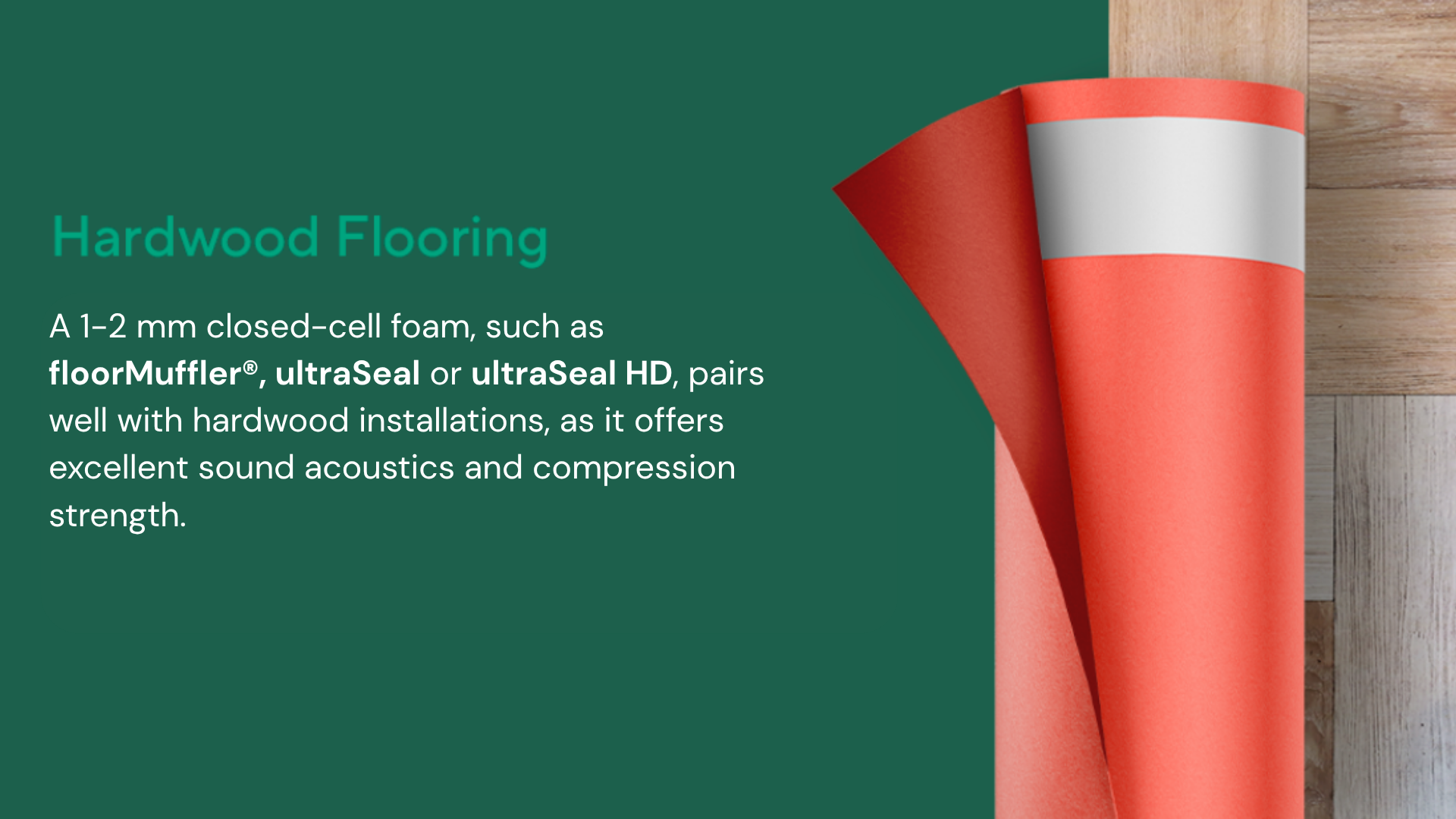
For solid hardwood, engineered wood, and laminate flooring, underlayment selection is less about thickness and more about the conditions of the subfloor and the performance priorities of the space. These flooring types rely on different installation methods—such as nail-down, glue-down, or floating systems—which means the role of underlayment varies significantly.
In these applications, key considerations include moisture protection from the subfloor, sound control between levels, and overall, underfoot comfort. A concrete subfloor may require stronger moisture resistance, while upper-level installations may prioritize acoustic performance to reduce impact noise. Because these flooring systems are structurally supported in different ways, the most effective underlayment is one that balances density, stability, and moisture control rather than relying on increased thickness alone.
Luxury Vinyl (LVP/LVT)
Luxury vinyl plank (LVP) and luxury vinyl tile (LVT) require a different approach, where underlayment thickness becomes more critical to performance. These flooring systems use a click-lock mechanism that depends on tight, stable joint engagement.
In this case, excessive underlayment thickness or cushioning can actually be detrimental, as too much give can allow movement in the flooring system and place stress on the locking joints over time. For this reason, LVP and LVT perform best with thin, dense, high-stability underlayments that provide moisture protection and sound reduction without compromising structural integrity. You can depend on floorMuffler® LVT ultraSeal or floorMuffler® Encore, for flooring with a pre-attached pad, as high-performance moisture barriers and acoustic underlayments.
What to Consider When Selecting an Underlayment
Aside from flooring type, the following qualities determine which underlayment option is best suited for your project:
Subfloor Type
While wood and concrete subfloors have different characteristics, selecting the right underlayment is less about thickness and more about choosing the appropriate material and construction for the application.
Concrete subfloors, for example, are dense and can emit moisture, making moisture protection a critical factor. In these cases, underlayments with built-in moisture barriers or moisture-resistant materials are often required—regardless of thickness.
Wood subfloors, on the other hand, are typically drier and more forgiving, so the focus is often on sound control and floor stability, especially in multi-level environments.
Existing Flooring
When installing new flooring over existing flooring, such as vinyl over linoleum, the underlayment decision is especially vital. A thin, dense underlayment of 1-2mm is typically the best option for avoiding excessive buildup, maintaining proper transitions, and ensuring the new floor’s stability.
Acoustic Performance
Premium underlayments offer better sound reduction, particularly for impact noise, by absorbing more vibrational energy. However, it’s important to have realistic expectations. Underlayment alone cannot eliminate all sound, but it can significantly dampen it.
When noise is a primary concern, such as in apartments or multi-story dwellings, the most effective choice is a high-performance acoustic underlayment designed specifically for sound attenuation and stability. When sound reduction is less of a priority, a moisture-focused or stability-focused underlayment may be more appropriate.
floorMuffler® is dedicated to acoustic excellence. Our underlayments, such as floorMuffler® quietCure™, undergo rigorous testing to ensure they demonstrate superior sound transmission reduction.
Find High-Quality Underlayment for your Next Flooring Installation
Before choosing underlayment thickness, consider your project’s unique requirements and priorities. Finding the right balance between thickness and required characteristics helps ensure stability and comfort in every room.
floorMuffler® offers high-quality flooring solutions for all types of projects, ensuring optimal performance. Our underlayment solutions are engineered with advanced technology to optimize every flooring installation. Explore our comprehensive range of premium underlayment products, or contact our team for help choosing the right option for your project.

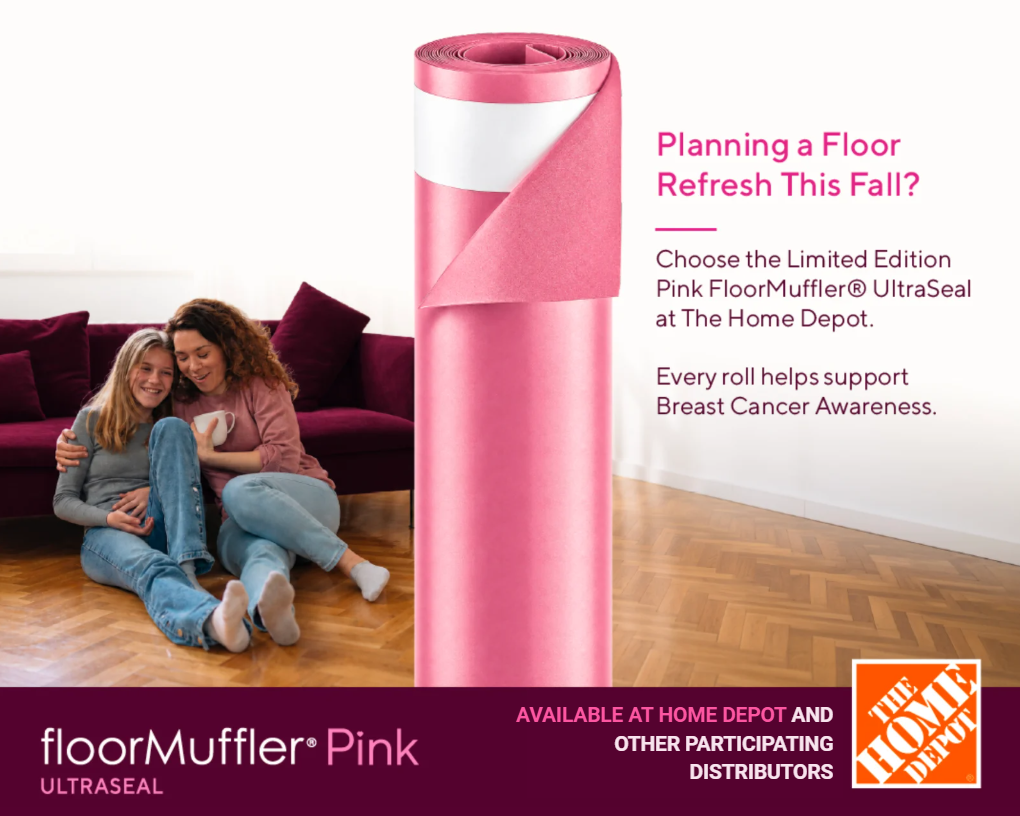
 floorMuffler Pink UltraSeal is at Home Depot ® – Purchases support the